Docker Alertmanager: Monitoring & Alerting Guide
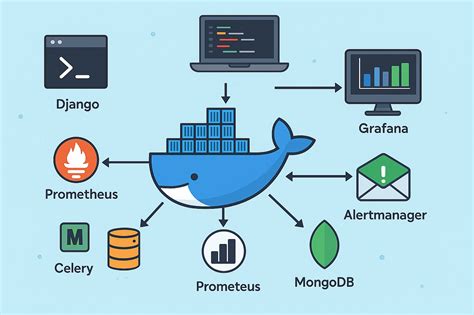
Docker Alertmanager: Monitoring & Alerting Guide
So, you’re diving into the world of Docker and want to make sure your containers are behaving? That’s awesome! Setting up proper monitoring and alerting is super crucial for keeping your applications healthy and responsive. In this guide, we’re going to explore how to use Docker with Alertmanager to achieve just that. Think of Alertmanager as your on-call buddy, always watching and ready to ping you when things go sideways. Let’s get started, guys!
Table of Contents
What is Alertmanager?
Okay, first things first, what exactly is Alertmanager? Alertmanager is an open-source application used for handling alerts sent by client applications such as Prometheus. It’s responsible for deduplicating, grouping, and routing alerts to the appropriate receiver, such as email, Slack, PagerDuty, or any other notification system you can think of. Basically, it prevents you from being spammed with a million identical alerts when something goes wrong and ensures the right people are notified at the right time. Alertmanager plays a critical role in any monitoring stack, especially when dealing with containerized applications in Docker. By centralizing alert handling, you can define clear escalation policies and avoid alert fatigue. This helps your team respond faster and more effectively to incidents, minimizing downtime and ensuring the overall stability of your Dockerized applications. Setting up Alertmanager involves configuring routing rules that determine where and how alerts are sent, based on labels and other criteria. The flexibility of Alertmanager allows you to tailor your alerting strategy to the specific needs of your application and infrastructure. Whether you’re running a small personal project or a large enterprise deployment, Alertmanager is an invaluable tool for maintaining a healthy and reliable system. To put it simply, Alertmanager is a must-have . In essence, Alertmanager acts as the central nervous system for your monitoring infrastructure, processing and directing alerts to the right channels and people, so you can focus on what matters most: keeping your applications running smoothly.
Why Use Alertmanager with Docker?
So, why bother using Alertmanager with Docker, you ask? Well, Docker makes it super easy to deploy and manage applications in containers, but those containers can sometimes act up. They might crash, run out of resources, or start throwing errors. Without a proper alerting system, you’d have to constantly monitor your containers manually, which is not only tedious but also prone to human error. Alertmanager steps in to automate this process. It integrates seamlessly with monitoring tools like Prometheus, which can track various metrics about your Docker containers, such as CPU usage, memory consumption, and network traffic. When these metrics exceed predefined thresholds, Prometheus sends alerts to Alertmanager. Alertmanager then takes over, deduplicates the alerts (so you don’t get spammed), groups similar alerts together, and routes them to the appropriate notification channels, such as email, Slack, or PagerDuty. This ensures that you’re promptly notified of any issues affecting your Docker containers, allowing you to take immediate action to resolve them. Using Alertmanager with Docker not only saves you time and effort but also improves the overall reliability and stability of your applications. It enables you to proactively identify and address potential problems before they escalate into major incidents. Moreover, Alertmanager’s flexible configuration options allow you to customize your alerting strategy to match the specific requirements of your Dockerized environment. For instance, you can define different routing rules based on the severity of the alert, the affected container, or the time of day. This ensures that critical alerts are immediately escalated to the appropriate on-call personnel, while less urgent alerts can be handled during regular business hours. In summary, Alertmanager and Docker are a match made in heaven, providing you with a robust and automated solution for monitoring and alerting on your containerized applications.
Prerequisites
Before we dive into the setup, let’s make sure you have a few things in place. First, you’ll need
Docker
installed on your system. If you haven’t already, head over to the Docker website and follow the installation instructions for your operating system. Next, you’ll need
Docker Compose
. Docker Compose simplifies the process of defining and running multi-container Docker applications. It allows you to define your application’s services, networks, and volumes in a single
docker-compose.yml
file, making it easy to deploy and manage your entire application stack. You’ll also need a basic understanding of
Prometheus
, as it’s the monitoring tool that will be sending alerts to Alertmanager. Familiarize yourself with Prometheus’s query language (PromQL) and its configuration options. While we won’t cover Prometheus in detail in this guide, knowing the basics will help you understand how alerts are generated and sent to Alertmanager. It’s also helpful to have a basic understanding of
YAML
, as we’ll be using YAML files to configure both Docker Compose and Alertmanager. YAML is a human-readable data serialization format that is commonly used for configuration files. If you’re not familiar with YAML, there are plenty of online resources that can help you get up to speed. Finally, you’ll need a
text editor
to create and modify configuration files. Any text editor will do, but a code editor with syntax highlighting and other features can make your life easier. Popular options include Visual Studio Code, Sublime Text, and Atom. With these prerequisites in place, you’ll be well-equipped to follow along with the rest of this guide and set up Alertmanager with Docker successfully.
Setting up Alertmanager with Docker Compose
Alright, let’s get our hands dirty and set up
Alertmanager using Docker Compose
. We’ll start by creating a
docker-compose.yml
file that defines our Alertmanager service. This file will specify the Docker image to use, the ports to expose, and any volumes to mount. Create a new directory for your Alertmanager setup and create a
docker-compose.yml
file inside it. Here’s a basic
docker-compose.yml
configuration:
version: "3.8"
services:
  alertmanager:
    image: prom/alertmanager:latest
    ports:
      - "9093:9093"
    volumes:
      - alertmanager_data:/alertmanager
      - ./alertmanager.yml:/etc/alertmanager/alertmanager.yml
    restart: always

volumes:
  alertmanager_data:
Let’s break down this configuration. The
version
field specifies the version of the Docker Compose file format. The
services
section defines the services that make up our application. In this case, we have a single service called
alertmanager
. The
image
field specifies the Docker image to use for the Alertmanager service. We’re using the
prom/alertmanager:latest
image, which is the official Alertmanager image from Prometheus. The
ports
field maps port 9093 on the host to port 9093 on the container. This allows us to access the Alertmanager web UI from our browser. The
volumes
field mounts a volume to persist Alertmanager’s data and a configuration file. The
alertmanager_data
volume is used to store Alertmanager’s data, such as alert history and silences. The
./alertmanager.yml:/etc/alertmanager/alertmanager.yml
volume mounts the
alertmanager.yml
file from the current directory into the container at
/etc/alertmanager/alertmanager.yml
. This is where we’ll configure Alertmanager’s routing and notification settings. The
restart: always
option ensures that the Alertmanager container is automatically restarted if it crashes. Finally, the
volumes
section defines the
alertmanager_data
volume. Now that we have our
docker-compose.yml
file, we need to create the
alertmanager.yml
configuration file. This file defines how Alertmanager should handle alerts. Here’s a simple example:
route:
  receiver: 'web.hook'

receivers:
- name: 'web.hook'
  webhook_configs:
  - url: 'http://localhost:8080/'
This configuration defines a single route that sends all alerts to a receiver named
web.hook
. The
web.hook
receiver is configured to send alerts to a webhook endpoint at
http://localhost:8080/
. You can replace this with your own webhook endpoint or configure other notification channels, such as email or Slack. Save this file as
alertmanager.yml
in the same directory as your
docker-compose.yml
file. Now, to start Alertmanager, simply run
docker-compose up -d
in the directory containing your
docker-compose.yml
file. This will download the Alertmanager image, create the necessary volumes, and start the Alertmanager container in detached mode. You can then access the Alertmanager web UI by opening your browser and navigating to
http://localhost:9093
. From there, you can view active alerts, silence alerts, and configure Alertmanager’s settings.
Configuring Alertmanager
Alright, now that Alertmanager is up and running, let’s dive into configuring it to meet your specific needs.
Configuring Alertmanager
is all about defining how alerts are routed, grouped, and sent to different receivers. The main configuration file,
alertmanager.yml
, is where all the magic happens. We’ll start by exploring the key sections of the configuration file, including
route
,
receivers
, and
templates
. The
route
section defines the routing tree, which determines how alerts are processed and sent to different receivers. The routing tree consists of a root route and a set of child routes. Each route has a set of matchers that determine whether an alert should be processed by that route. Matchers can be based on alert labels, such as severity or service name. When an alert arrives, Alertmanager traverses the routing tree, starting at the root route. If the alert matches the matchers of a route, it is processed by that route. Routes can have child routes, which allows you to create complex routing logic. The
receivers
section defines the notification channels that Alertmanager can use to send alerts. Receivers can be configured to send alerts to email, Slack, PagerDuty, or any other notification system. Each receiver has a name and a set of configuration options that are specific to the notification channel. For example, an email receiver might have options for the SMTP server, sender address, and recipient address. A Slack receiver might have options for the Slack API token and the channel to send alerts to. The
templates
section defines the templates that Alertmanager uses to format alert notifications. Templates are written in the Go template language and can include alert labels, annotations, and other information. You can use templates to customize the appearance of your alert notifications and include relevant information for the recipient. For example, you might want to include the service name, the severity of the alert, and a link to the affected resource. Configuring Alertmanager effectively requires a good understanding of your application’s alerting requirements. You should define clear routing rules that ensure that alerts are sent to the appropriate teams or individuals. You should also configure your receivers to use the notification channels that are most effective for your team. Finally, you should customize your alert templates to provide recipients with the information they need to quickly understand and respond to alerts. By carefully configuring Alertmanager, you can ensure that your team is promptly notified of any issues affecting your applications and that they have the information they need to resolve those issues quickly.
Integrating with Prometheus
Now, let’s talk about integrating Alertmanager with Prometheus.
Prometheus is responsible for
collecting metrics from your Docker containers and sending alerts to Alertmanager when those metrics exceed predefined thresholds. To integrate Prometheus with Alertmanager, you need to configure Prometheus to send alerts to the Alertmanager endpoint. This is done in the
prometheus.yml
configuration file. Here’s an example of how to configure Prometheus to send alerts to Alertmanager:
alerting:
  alertmanagers:
  - static_configs:
    - targets:
      - localhost:9093
This configuration tells Prometheus to send alerts to the Alertmanager instance running on
localhost:9093
. You can also configure multiple Alertmanager instances for redundancy. Once you’ve configured Prometheus to send alerts to Alertmanager, you need to define alerting rules in Prometheus. Alerting rules are written in PromQL and specify the conditions under which an alert should be triggered. Here’s an example of an alerting rule that triggers an alert when CPU usage exceeds 80%:
groups:
- name: CPU Usage
  rules:
  - alert: HighCPUUsage
    expr: sum(rate(container_cpu_usage_seconds_total{name=~".*"}[5m])) by (name) > 0.8
    for: 1m
    labels:
      severity: critical
    annotations:
      summary: High CPU usage detected on {{ $labels.name }}
      description: CPU usage is above 80% for 1 minute on {{ $labels.name }}. Value: {{ $value }}
This rule defines an alert named
HighCPUUsage
that is triggered when the sum of CPU usage for all containers exceeds 80% for 1 minute. The
labels
section defines labels that are added to the alert. In this case, we’re adding a
severity
label with the value
critical
. The
annotations
section defines annotations that provide additional information about the alert. In this case, we’re adding a
summary
annotation that provides a brief description of the alert and a
description
annotation that provides more detailed information. When Prometheus triggers an alert, it sends the alert to Alertmanager. Alertmanager then processes the alert according to its configuration and sends it to the appropriate receiver. Integrating Prometheus with Alertmanager allows you to automate the process of monitoring your Docker containers and alerting you to any issues that may arise. By defining clear alerting rules and configuring Alertmanager to send alerts to the appropriate channels, you can ensure that you’re promptly notified of any problems and that you have the information you need to resolve those problems quickly.
Best Practices
To wrap things up, let’s go over some best practices for using
Alertmanager with Docker
. First, always use version control for your configuration files. This allows you to track changes, revert to previous versions, and collaborate with others. Store your
docker-compose.yml
and
alertmanager.yml
files in a Git repository and commit your changes regularly. Next, keep your Alertmanager configuration simple and modular. Avoid creating overly complex routing rules that are difficult to understand and maintain. Instead, break your configuration down into smaller, more manageable modules. Use labels effectively to route alerts to the appropriate teams or individuals. Define labels that accurately describe the affected service, environment, and severity. This will help you create more targeted and effective routing rules. Test your alerting rules regularly to ensure that they are working as expected. Simulate different failure scenarios and verify that alerts are being triggered and routed correctly. This will help you identify any issues with your configuration before they impact your production environment. Document your alerting rules and configuration. Provide clear descriptions of what each rule does and why it was created. This will help others understand your configuration and troubleshoot any issues that may arise. Monitor Alertmanager itself to ensure that it is healthy and functioning correctly. Use Prometheus to collect metrics about Alertmanager’s performance and configure alerts to notify you of any problems. This will help you ensure that your alerting system is always available and reliable. Finally, regularly review and update your alerting rules and configuration. As your application evolves, your alerting requirements may change. Make sure to review your rules and configuration regularly and update them as needed. By following these best practices, you can ensure that your Alertmanager setup is effective, reliable, and easy to maintain.
Alright, folks! You’ve now got a solid foundation for using Docker with Alertmanager to monitor and alert on your containers. Go forth and build resilient applications!
