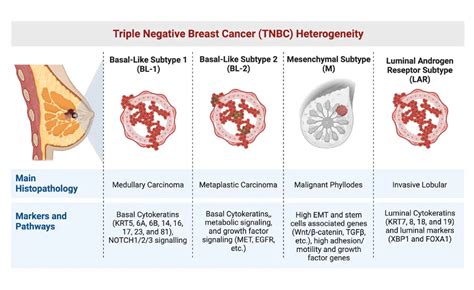
Medullary Breast Cancer: Understanding Triple-Negative Status Hello there, awesome readers! Today, we’re diving into a really important topic that many of you might be wondering about, especially if you or someone you know has been diagnosed with breast cancer. We’re going to talk about
Medullary Breast Cancer
and its relationship with being
triple-negative
. It’s a bit of a mouthful, but trust me, understanding this can bring a lot of clarity and empower you with knowledge. We’ll break down what each term means, how they connect, and why this information is super important for treatment and prognosis. Let’s get started, guys, and shine a light on this often-asked question! Getting a cancer diagnosis can be overwhelming, and often, the terminology used by doctors can feel like a foreign language. That’s why we’re here to explain things in a way that’s easy to grasp. When we discuss
Medullary Breast Cancer
, we’re talking about a
specific, rarer subtype
of invasive ductal carcinoma. It’s known for having some unique features that set it apart from other types of breast cancer. On the other hand,
triple-negative breast cancer (TNBC)
isn’t a
type
of cancer based on how the cells look under a microscope, but rather based on what
proteins
the cancer cells
don’t
have. Specifically, it means the cancer cells don’t have receptors for estrogen, progesterone, or HER2. So, the big question is, are these two things related? Does having
Medullary Breast Cancer
automatically mean it’s also
triple-negative
? We’ll explore this fascinating overlap and clear up any confusion, providing you with high-quality, valuable content every step of the way. We want you to feel confident and informed, knowing exactly what these terms mean and what implications they hold. It’s not just about the science; it’s about understanding your health journey. Stay with me, as we unravel the complexities and provide you with clear answers. This isn’t just medical jargon; it’s vital information that could make a difference. Let’s empower ourselves with knowledge!### Diving Deep into Medullary Breast Cancer: What You Need to Know When we talk about
Medullary Breast Cancer
, we’re referring to a
distinct and somewhat unusual variant
of invasive ductal carcinoma, which is the most common type of breast cancer. But here’s the cool part: despite its name, which might sound intimidating,
medullary breast cancer
often behaves differently from other invasive ductal cancers. Typically, it accounts for a relatively small percentage of all breast cancers, usually
less than 5%
, making it one of the rarer forms. What makes it unique, you ask? Well, under the microscope, its cells have a very specific appearance. Pathologists look for certain
key characteristics
to make this diagnosis. These often include poorly differentiated cells – meaning they don’t look much like normal breast cells – that grow in a very dense, solid pattern. You’ll also often see a significant presence of
lymphocytes
, which are a type of white blood cell, essentially the body’s immune cells, surrounding and infiltrating the tumor. This
lymphocytic infiltrate
is a hallmark feature and is thought to be the body’s immune response trying to fight off the cancer, which is a pretty fascinating aspect! This strong immune response is actually one of the reasons why
medullary breast cancer
is often associated with a
better prognosis
than other high-grade invasive breast cancers, despite its aggressive cellular appearance. It’s like your body is already putting up a good fight! Another important characteristic is the tumor’s
circumscribed borders
. Instead of having tendrils that irregularly spread into the surrounding tissue,
medullary breast cancer
tumors tend to have distinct, pushing borders, almost like a clear boundary between the tumor and healthy tissue. This makes them often
feel softer
than other breast cancers on physical examination and can sometimes even be mistaken for benign lumps. However, a biopsy is always necessary to confirm the diagnosis. The exact cause of
medullary breast cancer
is not entirely understood, but there have been associations, albeit not exclusive, with certain genetic mutations, particularly
BRCA1 gene mutations
. If you have a family history of breast cancer, especially if it’s been diagnosed at a younger age, discussing genetic testing with your doctor might be a good idea. Knowing about these specific features is
incredibly important
for pathologists because it guides diagnosis and, subsequently, treatment planning. Unlike more common types,
medullary breast cancer
usually doesn’t express hormone receptors (estrogen receptor, progesterone receptor) or HER2 protein, which brings us directly to our next big topic: its potential connection to
triple-negative breast cancer
. So, in summary,
medullary breast cancer
is a unique beast – a rare, often high-grade cancer with a distinct appearance, a noticeable immune cell presence, and often a surprisingly
favorable outlook
compared to other high-grade cancers, partly because of that very visible immune response. It’s crucial for clinicians and patients alike to understand these specific attributes to ensure the most effective and personalized care. This particular subtype stands out in the landscape of breast cancers, prompting a specific diagnostic and therapeutic approach.### Decoding Triple-Negative Breast Cancer (TNBC): The ‘Why’ Behind the Name Alright, guys, let’s get into the nitty-gritty of
Triple-Negative Breast Cancer (TNBC)
. This isn’t just some fancy medical term; it describes a very specific biological profile of breast cancer cells, and understanding it is absolutely crucial. When we say
