Netanyahu's Stance On Iran's Nuclear Bomb
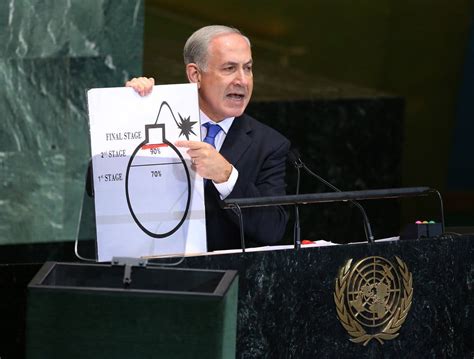
Netanyahu has been a vocal critic of Iran’s nuclear program for years. He has consistently warned the international community about the dangers of Iran acquiring nuclear weapons, emphasizing the threat it poses to Israel and global security. His stance is rooted in the belief that Iran’s intentions are inherently hostile and that a nuclear-armed Iran would be an existential threat to the Jewish state. The Israeli Prime Minister has repeatedly called for stricter sanctions and a more robust international response to curb Iran’s uranium enrichment activities and prevent it from developing a weapon of mass destruction. He has also suggested that military action might be necessary if diplomatic and economic pressure fails to achieve the desired outcome. Netanyahu’s unwavering focus on this issue has made it a central pillar of his foreign policy and a significant point of contention in regional and international relations. He believes that appeasement is not an option and that a firm stance is crucial to deterring Iran from pursuing its nuclear ambitions. The implications of Iran obtaining a nuclear bomb are far-reaching, not only for the Middle East but for the entire world. Netanyahu’s arguments often highlight the potential for nuclear proliferation in the region and the destabilizing effect it would have on an already volatile part of the globe. He has presented intelligence, in his view, that demonstrates Iran’s ongoing efforts to develop nuclear weapons, urging world powers to take his concerns seriously. The debate surrounding Netanyahu’s position often involves discussions about the effectiveness of sanctions, the risks of military intervention, and the broader geopolitical landscape of the Middle East. However, his personal conviction and the urgency with which he approaches the issue remain a defining characteristic of his leadership and his approach to foreign affairs. The potential for a nuclear arms race in the Middle East, should Iran succeed, is a scenario that Netanyahu actively seeks to prevent, viewing it as a catastrophic outcome that must be avoided at all costs. His rhetoric is often strong and direct, leaving no room for ambiguity regarding his perception of the threat posed by a nuclear-capable Iran. He has consistently urged for a unified international front to address this challenge, believing that collective action is the most effective way to ensure that Iran does not cross the nuclear threshold. The historical context of the region and the past actions of Iran are often cited by Netanyahu to bolster his arguments for a strong, proactive approach. He views the current situation as a critical juncture where decisive action is needed to safeguard the future. The sheer determination with which he has pursued this agenda underscores the gravity with which he and his government view Iran’s nuclear program. It’s not just a matter of regional security for Israel; it’s about preventing a fundamental shift in the global balance of power and averting a potential catastrophe. The world leaders who engage with Netanyahu on this topic often find themselves confronted with a deeply held conviction and a well-articulated set of arguments that are difficult to dismiss. His commitment to preventing Iran from obtaining nuclear weapons is a cornerstone of his political identity and a driving force behind his diplomatic and security strategies. He has spent a significant portion of his political career dedicated to this singular objective, viewing it as the ultimate test of leadership and international cooperation. The nuances of the Iran nuclear deal, the JCPOA, have also been a major point of focus for Netanyahu, who has been a staunch critic of its terms, arguing that it did not go far enough to prevent Iran from eventually developing a nuclear weapon. He has consistently advocated for a more stringent agreement that would permanently dismantle Iran’s nuclear capabilities. The urgency he conveys stems from a profound understanding of the potential consequences, and he believes that the international community has a moral and strategic imperative to act decisively before it’s too late. His speeches and public statements on the matter are often powerful, aiming to galvanize global action and underscore the immediate and long-term dangers associated with a nuclear-armed Iran. The stakes, in his view, could not be higher.
When it comes to the Netanyahu Iran bomb discussion, it’s crucial to understand that this isn’t a new concern. Benjamin Netanyahu, as the Prime Minister of Israel, has consistently voiced his alarm over Iran’s nuclear program for many years. He sees Iran’s pursuit of nuclear weapons as a direct and severe threat to Israel’s very existence, and he hasn’t been shy about telling the world. His core argument is that Iran, under its current leadership, cannot be trusted with nuclear capabilities, and that allowing them to develop a bomb would fundamentally destabilize the Middle East and pose a grave danger to global security. He has been a leading voice advocating for strong international action, pushing for stringent sanctions and a robust diplomatic effort to halt Iran’s progress. However, Netanyahu has also made it clear that if diplomacy and sanctions fail, military options must remain on the table. This stance has often put him at odds with some international powers who prefer a purely diplomatic approach, but for Netanyahu, the potential consequences of a nuclear-armed Iran are simply too dire to ignore. He has frequently presented what he describes as intelligence evidence to support his claims about Iran’s nuclear ambitions, urging world leaders to take his warnings seriously. His perspective is deeply influenced by historical events and the security concerns unique to Israel in a volatile region. He believes that Iran’s nuclear ambitions are not just a theoretical threat but a clear and present danger that requires proactive and firm measures. The complexities of international diplomacy, the nuances of arms control, and the geopolitical realities of the Middle East all converge in this ongoing debate. Netanyahu’s consistent message has been one of vigilance and a call for collective responsibility to prevent Iran from achieving its goal. He views the Netanyahu Iran bomb issue as a defining challenge of our time, one that demands unwavering attention and a resolute commitment to preventing proliferation at all costs. The ramifications of Iran acquiring nuclear weapons extend beyond regional rivalries; they could trigger a dangerous arms race and embolden other states to pursue similar capabilities, creating a far more perilous world for everyone. His administration has dedicated significant resources and political capital to countering Iran’s nuclear program, employing a multi-faceted strategy that includes intelligence gathering, diplomatic pressure, and cyber operations. The focus is always on prevention, on ensuring that Iran never reaches the threshold of nuclear weaponization. He has often used strong, sometimes confrontational, language to convey the urgency of the situation, believing that ambiguity or complacency could be catastrophic. The international community’s response has varied over the years, with different administrations adopting different approaches. However, Netanyahu’s position has remained remarkably consistent: Iran must not be allowed to acquire nuclear weapons. He has been a persistent critic of international agreements that he believes do not adequately address the threat, advocating for more comprehensive and verifiable measures. His commitment to this cause is deeply personal and tied to his understanding of Israel’s security needs. The potential for a nuclear-armed Iran is, for him, the ultimate threat, and he has made it his mission to rally international support to prevent it. The debate often gets heated, with accusations of warmongering on one side and charges of naivete or appeasement on the other. Yet, Netanyahu stands firm, grounded in what he perceives as the harsh realities of the region and the nature of the Iranian regime. His leadership on this issue has shaped global discourse and influenced policy decisions for over a decade, making the Netanyahu Iran bomb a focal point in international security discussions. The ultimate goal, from his perspective, is to create a situation where Iran’s nuclear ambitions are permanently and verifiably dismantled, ensuring peace and stability for Israel and the broader Middle East. He often stresses the need for international unity, arguing that a divided front would only embolden Iran. The historical precedent of nuclear proliferation serves as a constant reminder of the stakes involved, and Netanyahu never misses an opportunity to highlight the potential for a catastrophic domino effect if Iran succeeds. His relentless pursuit of this objective underscores the profound significance he attaches to preventing this particular outcome. He sees it as his paramount duty to protect his nation, and this particular threat looms larger than any other in his strategic calculations. The ongoing efforts to negotiate or enforce agreements with Iran are closely scrutinized by Netanyahu and his government, who are always looking for potential loopholes or avenues for Iran to advance its nuclear program. His vigilance is unwavering, and his commitment to confronting this threat is absolute. The international community often finds itself navigating a complex diplomatic landscape, with Netanyahu acting as a powerful advocate for a strong stance against Iran’s nuclear aspirations. The gravity of the situation, as he perceives it, necessitates a level of international cooperation and resolve that he believes has sometimes been lacking. His consistent messaging serves as a perpetual reminder of the potential dangers lurking in the shadows of a nuclear-armed Iran. He views the Netanyahu Iran bomb debate not as a political issue, but as a fundamental matter of survival and global security. His focus remains steadfast on ensuring that Iran does not achieve its nuclear objectives, employing every tool at his disposal to prevent such an outcome. The historical lessons from other nuclear powers and the potential for escalation in the Middle East are always at the forefront of his strategic thinking. He is a leader who has placed this issue at the very top of his agenda, and his influence on the global conversation about Iran’s nuclear program is undeniable. He believes that the world must remain vigilant and united to counter this existential threat effectively.
